What Is Preventive Pool Maintenance and Why Does It Save Money
 Anthony · Citywide Pools LA · technically reviewed
 Pool Talk
A pool pump can cost as much as $270 per year to operate, according to the U.S. Department of Energy. That makes equipment checks part of pool maintenance—not an optional extra after something breaks.
Preventive pool maintenance is the regular testing, cleaning, inspection, and adjustment that keeps small problems from becoming expensive ones. It helps maintain safe water, protects plaster and tile, keeps circulation working, and identifies equipment trouble before a hot week or busy weekend puts more strain on the system.
For a Los Angeles homeowner, the savings come from consistency. A technician catches a dirty filter, weak return flow, or recurring chemistry problem while it is still manageable instead of waiting for cloudy water, surface damage, or a failed pump.
What Preventive Pool Maintenance Includes
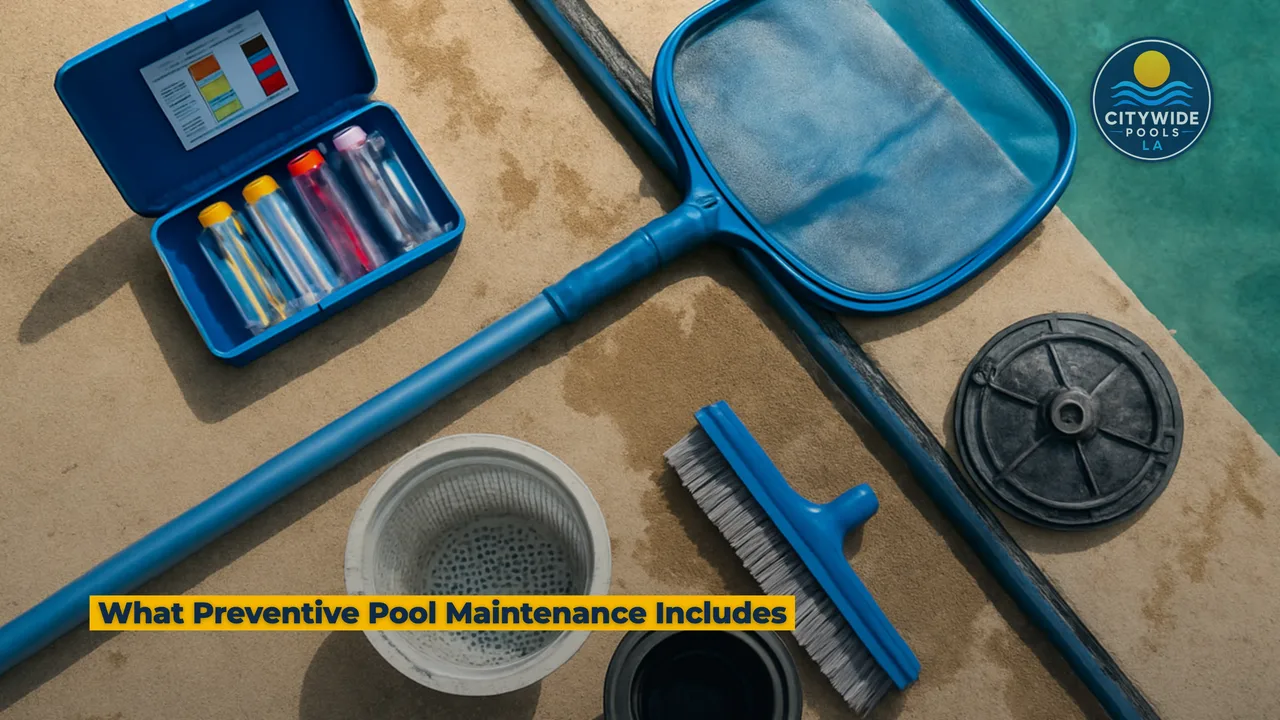
Preventive care looks at the whole pool, not just the waterline. A thorough visit may include:
- Testing and balancing pH and sanitizer
- Skimming debris and emptying baskets
- Brushing steps, walls, benches, and corners
- Checking water level and circulation
- Inspecting visible plumbing and equipment behavior
- Monitoring filter pressure and cleaning needs
- Looking for early buildup on tile, coping, and waterline surfaces
- Recording changes from one visit to the next
That last part matters. A single visit gives you a snapshot. Regular service gives you a pattern.
If pump noise changes, return flow weakens, or the filter pressure starts behaving differently, those details can point to a developing problem. The earlier someone notices the change, the more options you usually have.
Why Water Testing Prevents Bigger Corrections
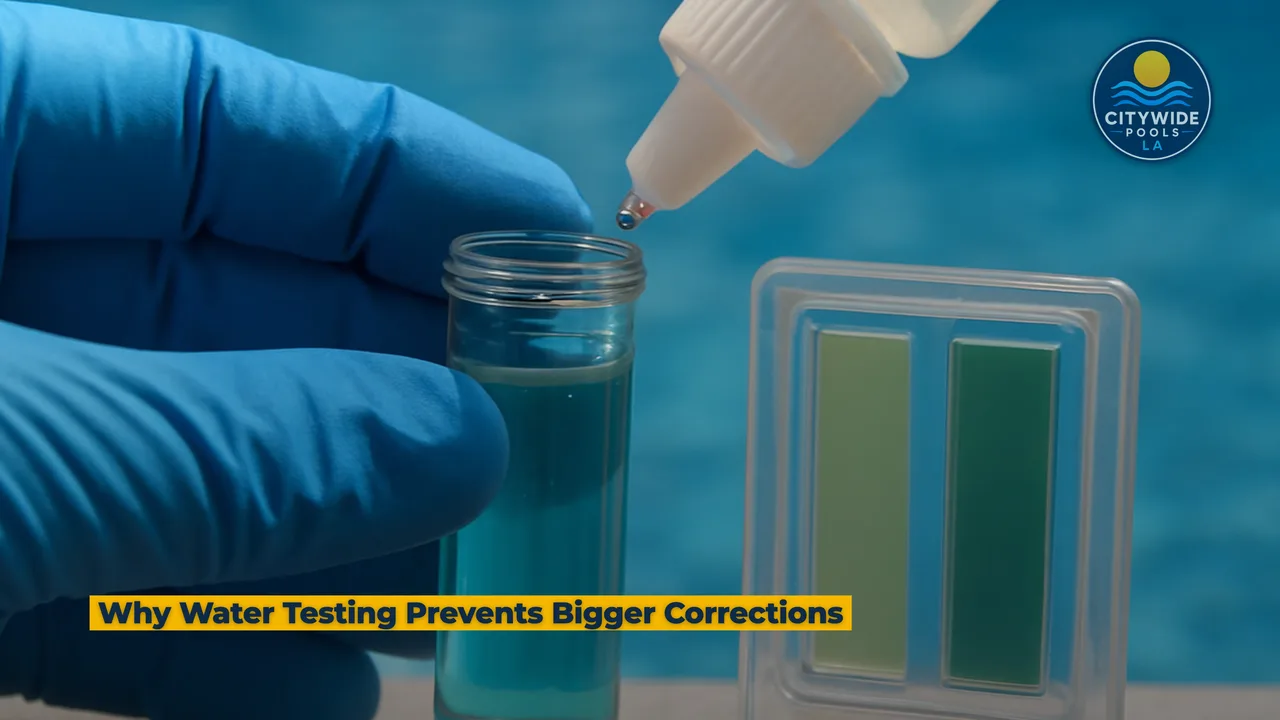
Pool water can be chemically off before the issue becomes obvious from the deck. That is why testing belongs in every preventive maintenance plan.
The Centers for Disease Control and Prevention recommends a home-pool pH range of 7.0 to 7.8. The CDC also recommends chlorine of at least 1 part per million, or at least 2 parts per million when cyanuric acid or stabilized chlorine is used. These targets help disinfect the water and keep it in a range that is more comfortable for swimmers and less stressful for pool surfaces and equipment.
Testing frequency depends on how the pool is being used. CDC operating guidance advises checking disinfectant and pH at least twice per day, with more frequent checks during heavy use. The Pool & Hot Tub Alliance consumer guidance recommends testing pH and chlorine at least twice a week, and more often after heavy rain, frequent swimming, or algae growth.
Those recommendations serve different situations, but the practical lesson is simple: do not rely on appearance alone or test only when there is a problem.
A homeowner can safely use a reliable test kit or test strips, record the results, and share unusual readings with a pool professional. Avoid making large chemical corrections based on a guess, especially if you are unsure which product is already in the water. Never mix pool chemicals together.
Los Angeles Fill Water Is Only One Part of the Picture
Homeowners sometimes blame the local water supply when pool chemistry becomes difficult. Los Angeles tap water is regulated and monitored, but fill water is still only one factor among many.
LADWP’s current annual water-quality source is its Drinking Water Quality Report, which reports 2024 data and is required by the California State Water Resources Control Board, Division of Drinking Water. LADWP reported that Los Angeles received 59 percent of its treated water from the Los Angeles Aqueduct in 2024.
That information provides useful context, but it does not replace testing the individual pool. Water evaporates while minerals remain behind. Swimmers add contaminants. Rain, dust, landscaping debris, and top-offs all change the load on the water.
Preventive maintenance tracks what is happening in your pool rather than assuming every pool in Los Angeles will behave the same way.
Brushing and Circulation Protect Surfaces
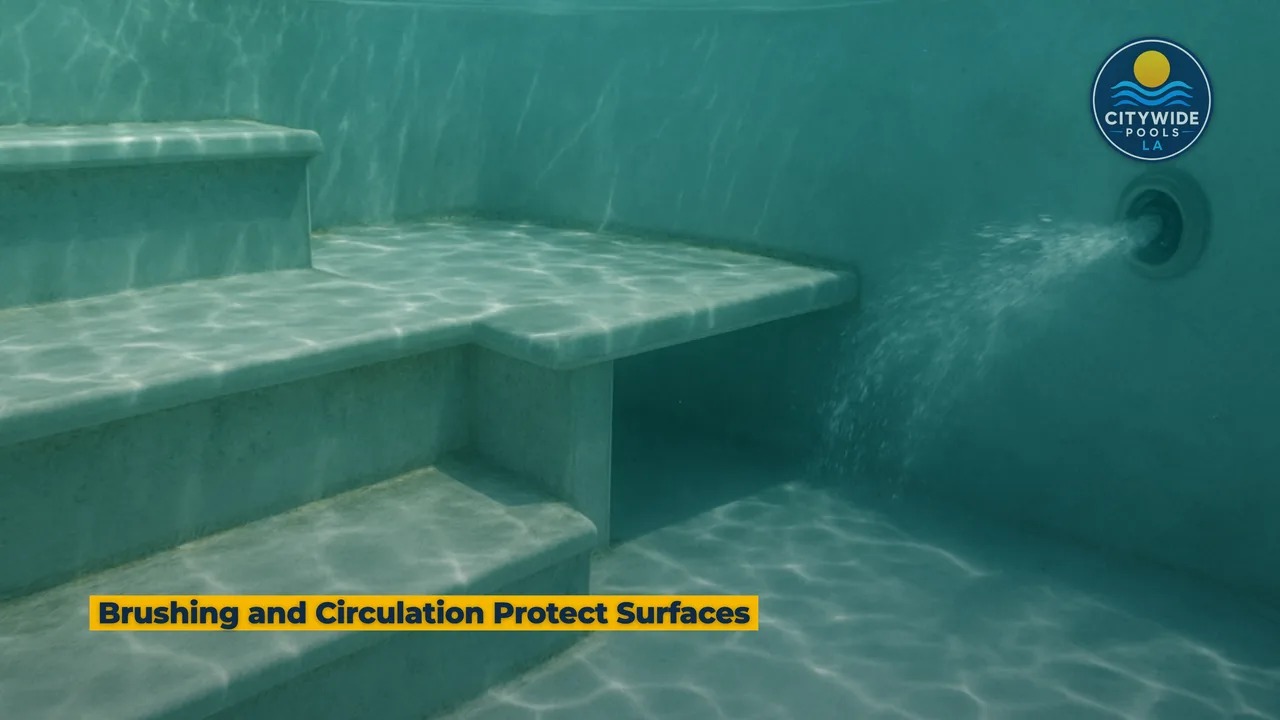
Brushing is a small task with a large preventive benefit. Steps, benches, corners, and shaded walls often need attention before the rest of the pool. Brushing moves settled material into circulation so the filtration system has a chance to remove it.
A packed skimmer basket or pump basket can also reduce circulation. Weak flow makes it harder for the filter and sanitizer to do their jobs. In the field, we pay attention to changes such as:
- A pump sounding louder or different
- Air visible in the system
- Reduced return flow
- Filter pressure that changes unexpectedly
- Water taking longer to clear after normal use
A homeowner can safely look at the pump area, check whether baskets are visibly full, and note whether the returns feel weaker than usual. Do not open a pressurized filter, remove pump-lid components while the system is running, or disassemble electrical equipment. Turn equipment concerns over to a qualified professional.
Equipment Efficiency Can Be Part of the Savings
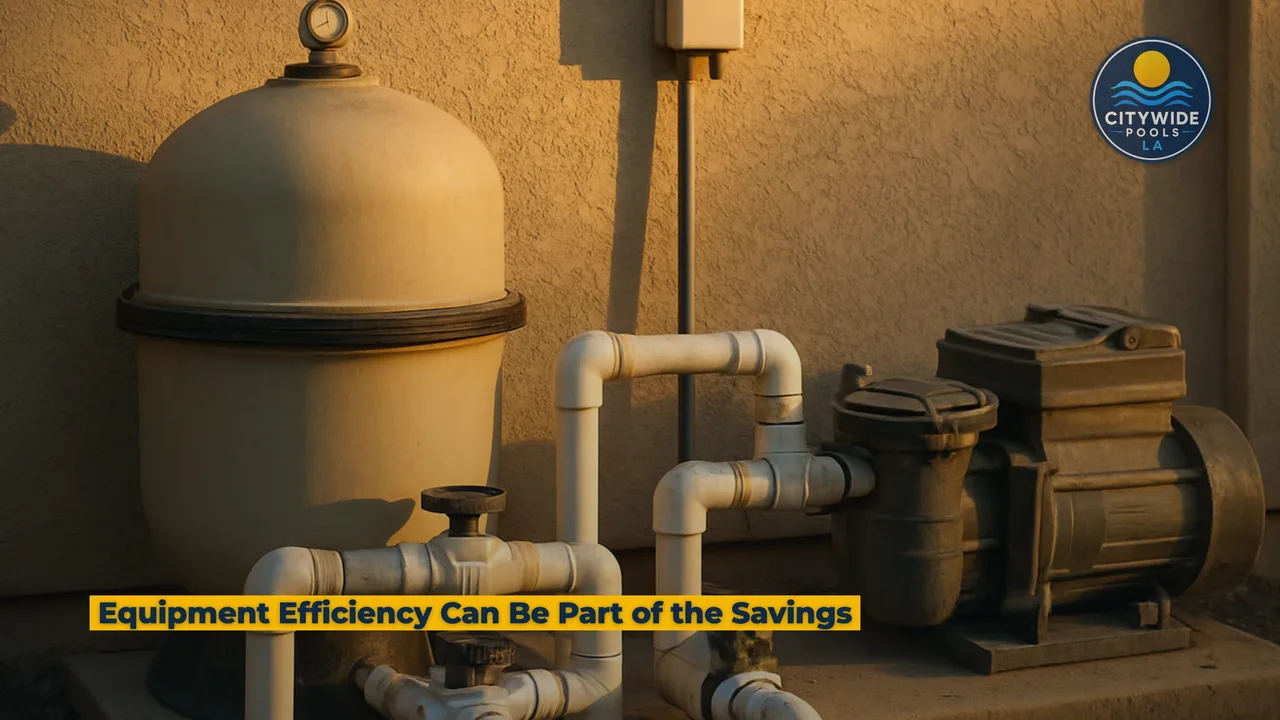
Preventive maintenance is not only about avoiding repairs. It can also help identify equipment that is costing more to run than it should.
The Department of Energy says a pool pump can be one of a home’s second-largest energy users and may cost up to $270 per year in utility bills. ENERGY STAR says certified in-ground pool pumps use 20 percent less energy than standard pumps and save about $50 per year in energy costs.
ENERGY STAR also says certified pool pumps run more quietly, may prolong the life of the filtering system, and can save more than $2,800 over the pump’s lifetime. Those are product-program estimates, not a promise that every replacement will produce the same result. Your pool size, plumbing, pump speed, schedule, and equipment condition all matter.
The safe homeowner step is to compare utility concerns and equipment symptoms with a professional before replacing anything. A pump that is noisy or inefficient may need a repair, a schedule adjustment, or a correctly sized replacement—not automatically the most expensive option.
Preventive Care Helps Avoid Discharge Problems
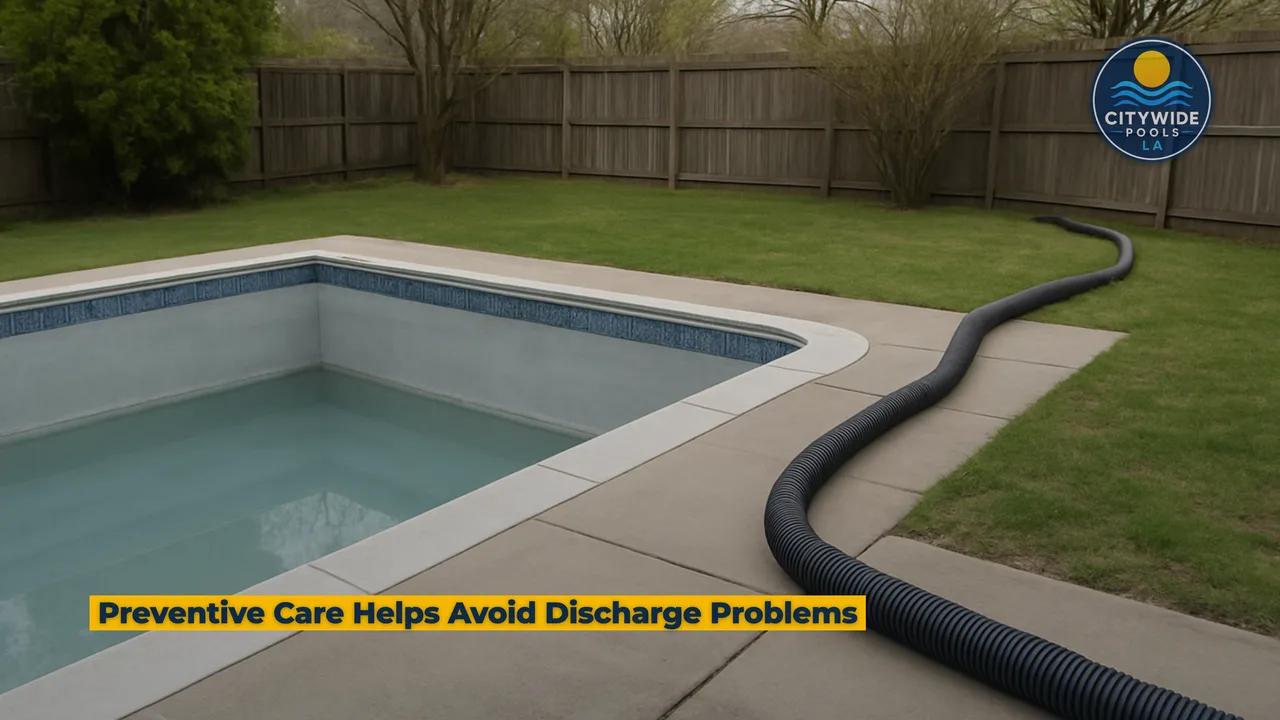
Major pool work sometimes involves draining or discharging a large volume of water. That should be planned, not treated as a last-minute cleanup step.
The City of Los Angeles requires 72-hour advance notification for pool, spa, or fountain discharges at or above 100,000 gallons. Local discharge rules can also affect where water may go and how it must be handled. A professional can help determine whether notification or other requirements apply before a large project begins.
Routine maintenance does not eliminate every future expense. It does reduce the chance that neglected water, surfaces, or equipment force you into an urgent correction at the worst possible time.
What You Can Check Yourself
Safe homeowner checks include:
- Look at the water level and note unusual changes.
- Empty accessible skimmer baskets when the pump is off.
- Observe return flow and listen for new equipment noises.
- Test pH and chlorine with a maintained kit.
- Remove surface debris and keep the area around equipment clear.
- Write down readings and symptoms so a technician can compare them over time.
Call a pool professional when water will not hold sanitizer, algae keeps returning, circulation is weak, the pump or filter behaves differently, or you suspect a leak. Also call before opening pressurized equipment, handling electrical components, performing an acid wash, or making a major chemical correction.
How Citywide Pools LA Handles Preventive Service

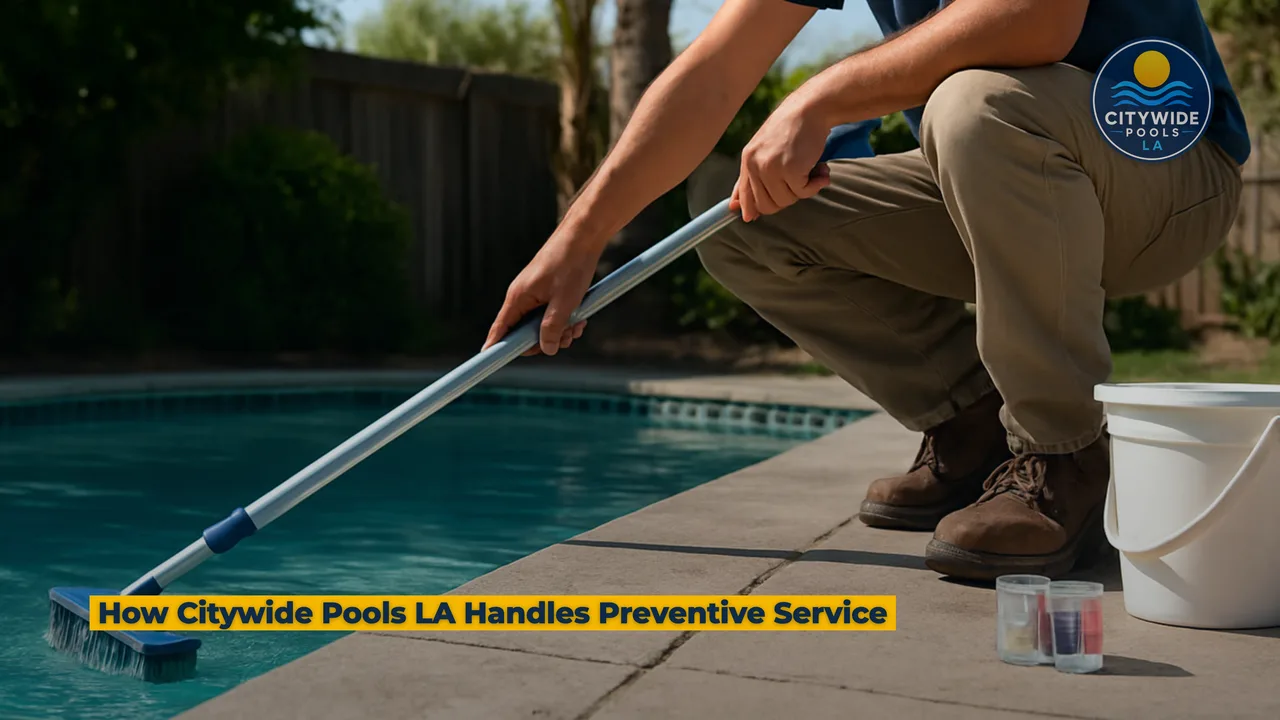
Citywide Pools LA’s weekly service includes balancing, cleaning, and equipment checks. That regular rhythm gives a technician the opportunity to notice changes instead of starting from scratch after every problem.
If you want a steadier plan for a Los Angeles pool, contact Citywide Pools LA to discuss weekly service, current pricing, and availability. We can help match the maintenance schedule to your pool, yard conditions, and equipment.
Frequently Asked Questions
Is preventive pool maintenance the same as weekly pool cleaning?
No. Cleaning removes debris and buildup that are already present. Preventive maintenance also tests the water, checks circulation, watches equipment, and tracks recurring changes. Cleaning is part of prevention, but it is not the entire plan.
How often should a home pool be tested?
The CDC advises checking disinfectant and pH at least twice daily in operating guidance, especially with heavy use. The Pool & Hot Tub Alliance recommends homeowners test pH and chlorine at least twice a week, with additional testing after heavy rain, frequent swimming, or algae growth. Follow the schedule that fits your pool’s use and your service plan.
Can I prevent all pool repairs with regular maintenance?
No. Preventive care cannot stop every component from wearing out. It can help identify restricted flow, unusual noise, filter problems, leaks, and chemistry issues earlier, when repair or replacement decisions may be less urgent.
Should I replace my pool pump to save money?
Not automatically. A more efficient pump may reduce energy use, but correct sizing and operation matter. Have a professional evaluate the pump, plumbing, run schedule, and filter before choosing replacement equipment.
When should I call a professional?
Call when the pool repeatedly develops algae or cloudy water, sanitizer will not hold, circulation changes, equipment makes unusual noises, water levels drop unexpectedly, or you need to open pressurized or electrical equipment. Professionals should also handle acid washing, major chemical corrections, and large discharge planning.