The Beginner's Guide to Pool Alkalinity
 Anthony · Citywide Pools LA · technically reviewed
 Pool Talk
Pool alkalinity is usually kept between 80 and 120 parts per million, yet it is one of the easiest readings to skip. It helps keep pH steady, so when it drifts, your plaster, equipment, and swimmers can feel the effects before the water looks cloudy.
A pH reading that keeps bouncing is often a sign that alkalinity needs attention. Reliable pool service should include an alkalinity check, brushing, skimming, and a look at the filter area, not just a quick chlorine dose. Recording each reading helps catch problems before they cause scale, stains, or swimmer irritation.
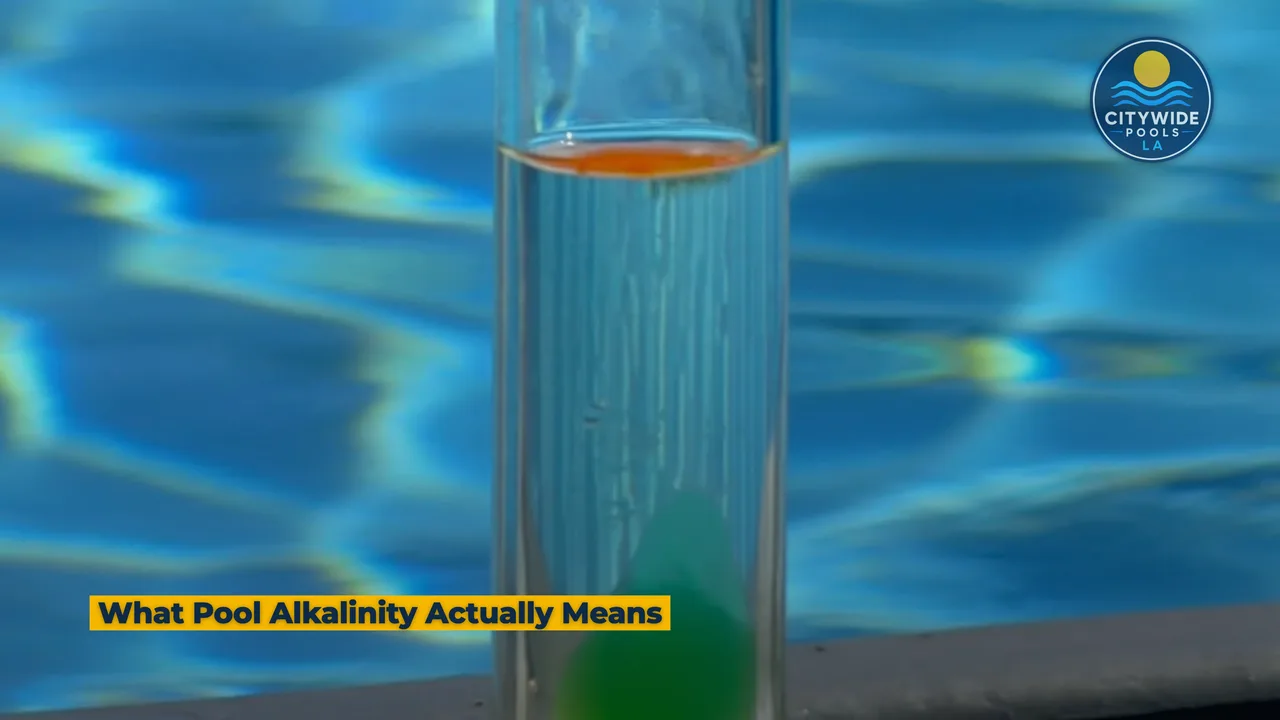
What Pool Alkalinity Actually Means
Total alkalinity measures how well pool water resists pH swings. Think of it as the water’s shock absorber.
When alkalinity sits in the right range, pH changes more slowly. Chlorine can work more predictably. The surface, plumbing, heater, and equipment stay under less stress.
When alkalinity falls too low, pH can bounce around. One test may look fine. The next test may show sharp movement. That’s when clear water starts feeling unpredictable.
When alkalinity climbs too high, pH can keep drifting upward. The water may look dull. Scale can form around tile, spillways, heaters, and salt cells.
The Council for the Model Aquatic Health Code describes total alkalinity as water’s ability to buffer hydrogen ions. Its 2024 guidance lists a maintained range of 60 to 180 ppm for aquatic venues. Backyard pools usually aim tighter, because homeowners want steadier water between visits.
For Los Angeles, this matters more than it sounds. Heat, evaporation, fill water, dust, leaves, sunscreen, and heavy weekend use all change the chemistry load.
The Right Alkalinity Range for LA Plaster Pools
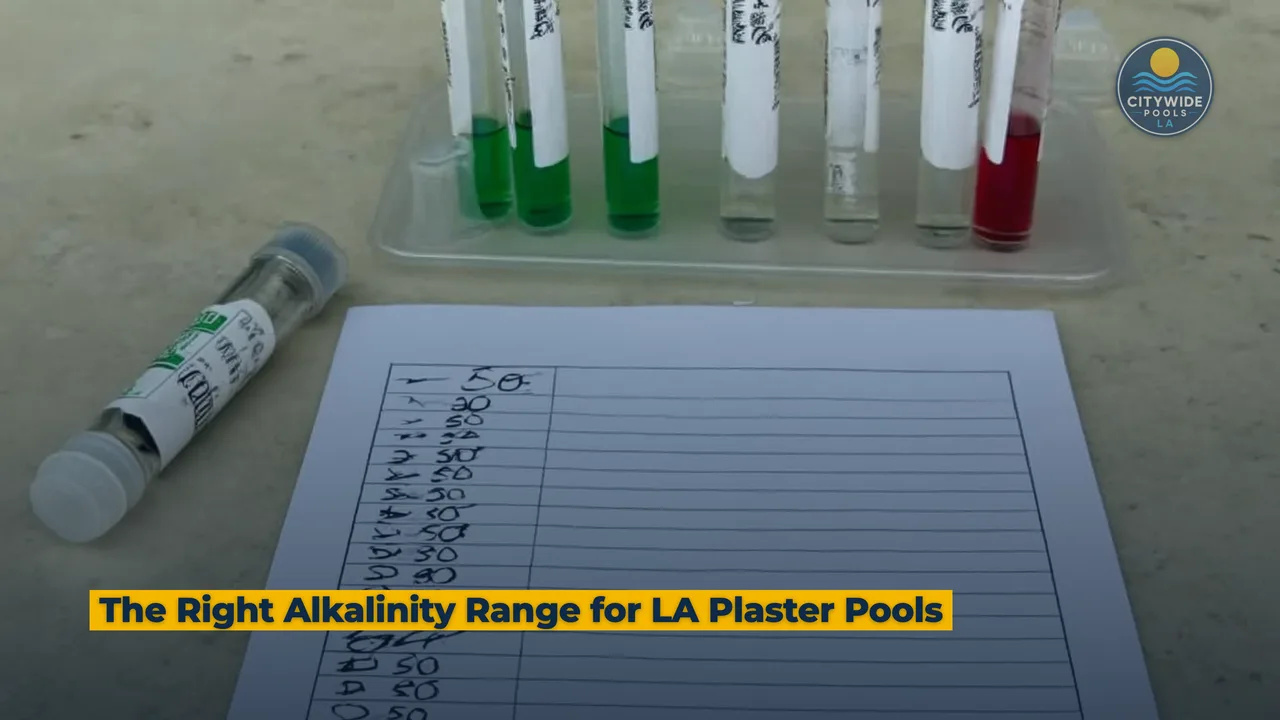
Most residential pools work well with total alkalinity near 80 to 120 ppm. Plaster pools commonly need that steadier middle zone.
The National Plasterers Council’s 2026 water chemistry guidance says total alkalinity should stay within recommended limits. It also warns that water below proper range can become aggressive toward plaster surfaces.
That matters for older plaster pools in Sherman Oaks, Tarzana, Beverly Hills, and Bel Air. A pool can look blue while the water slowly pulls against the surface.
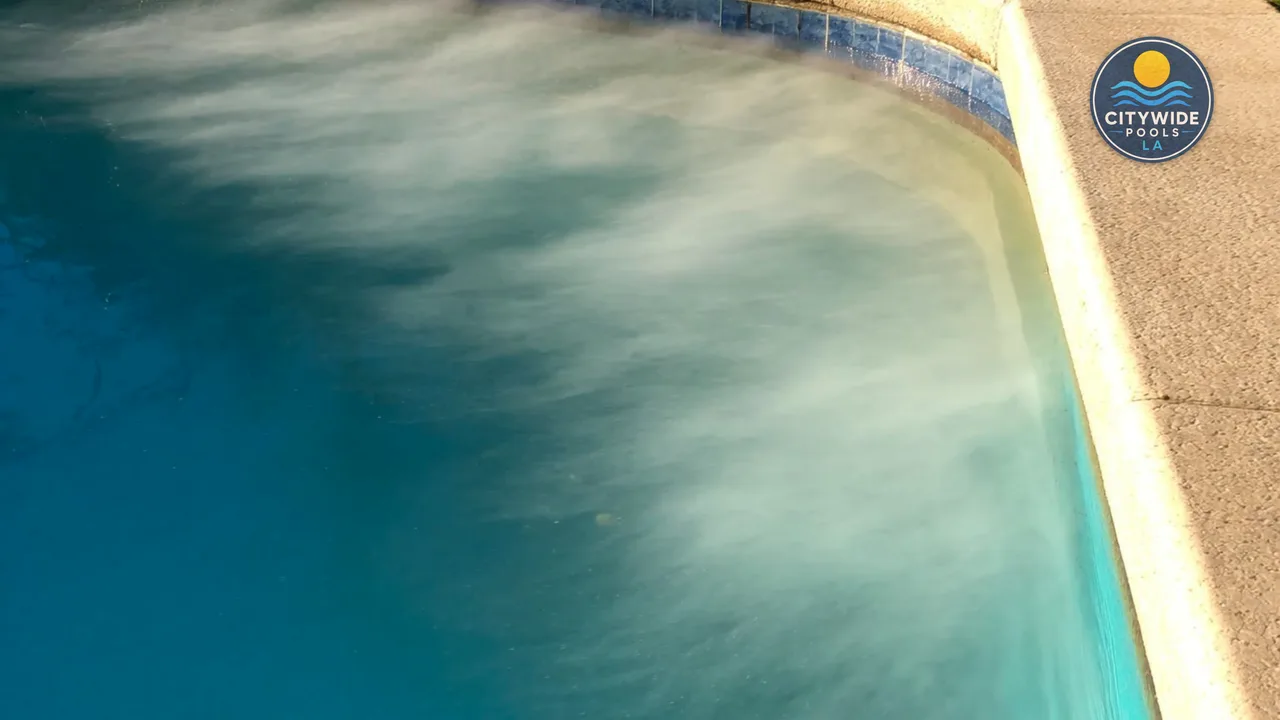
The target can shift by sanitizer type. Some chlorine products pull pH down over time. Others push pH up. Salt systems, liquid chlorine, tablets, acid demand, and fill water all change the pattern.
That’s why a tailored approach beats guessing.
Why Clear Water Still Goes Cloudy
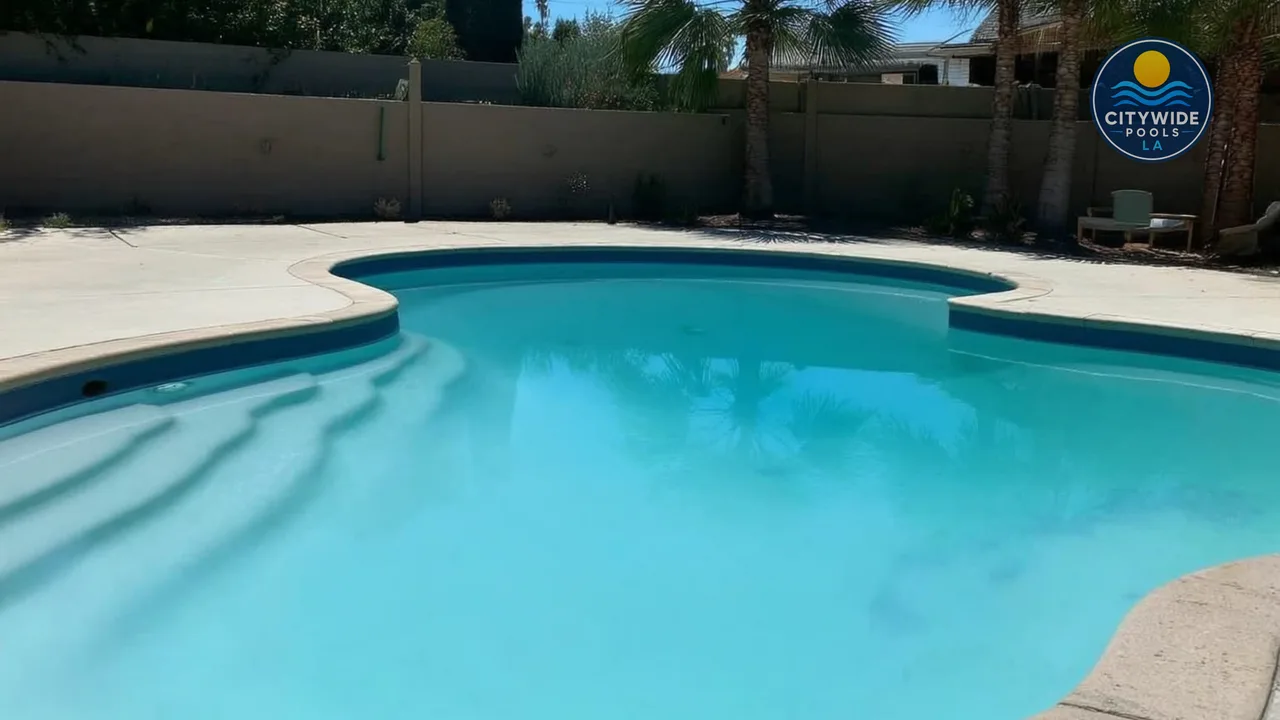
Clear water is a snapshot. Balanced water is a pattern.
If your pH keeps rising after you lower it, check total alkalinity before adding more acid. Alkalinity helps hold pH steady, so the wrong level can make chlorine work less effectively.
The CDC’s 2024 home pool guidance recommends pH from 7.0 to 7.8. It also recommends at least 1 ppm free chlorine for pools. Those numbers matter because chlorine performance depends on water balance.
Alkalinity does not sanitize the pool. Chlorine handles that job. Alkalinity helps create steadier conditions so chlorine can do its work.
Here’s how the problem usually feels at home:
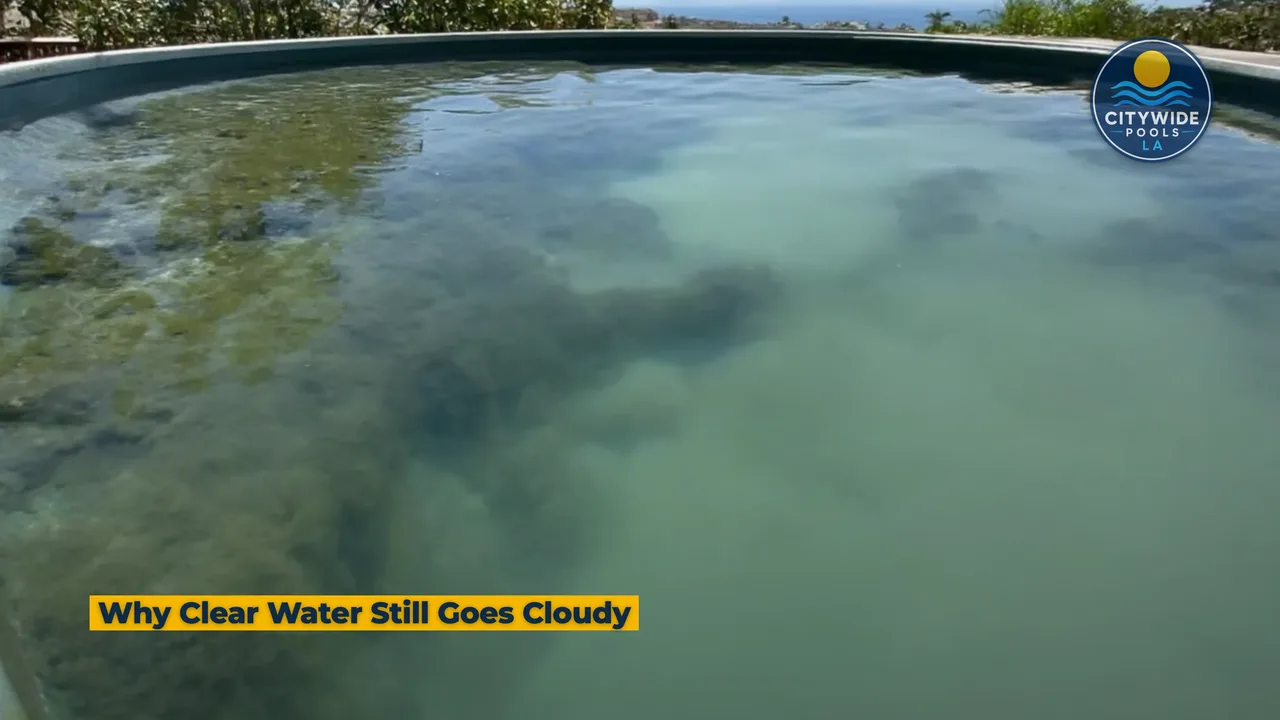
- The pool looks clear after service.
- The water gets used hard over the weekend.
- Leaves, dust, and sunscreen add load.
- The pH shifts before anyone notices.
- Cloudiness appears during the next hot stretch.
That is not always a one-time chemical issue. It can be a maintenance rhythm issue.
If brushing is skipped, film can build on walls and steps. If skimming is rushed, organic load stays in the water. If the filter area is ignored, circulation can fall behind.
That’s when Marcus sees the same pattern. Clear one week. Cloudy the next. A quick chemical correction may help briefly. It won’t solve the rhythm.
A reliable weekly pool service in Los Angeles should look for the pattern, not just the symptom.
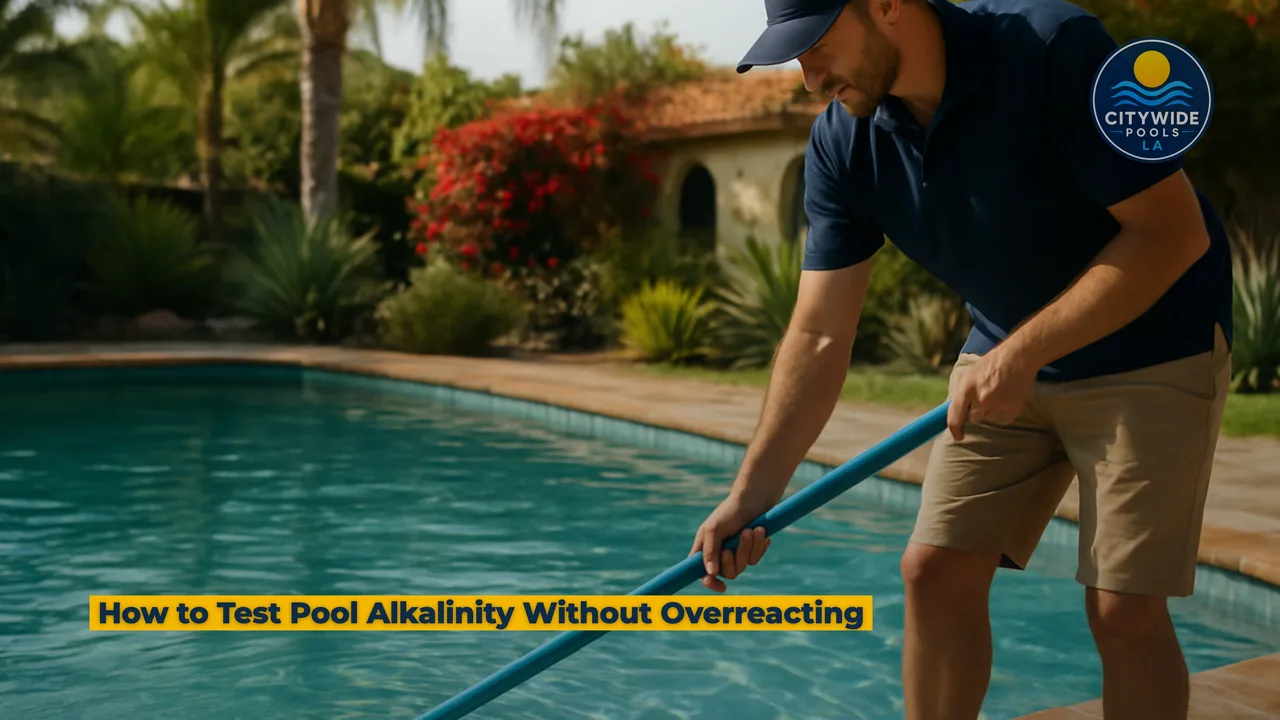
How to Test Pool Alkalinity Without Overreacting
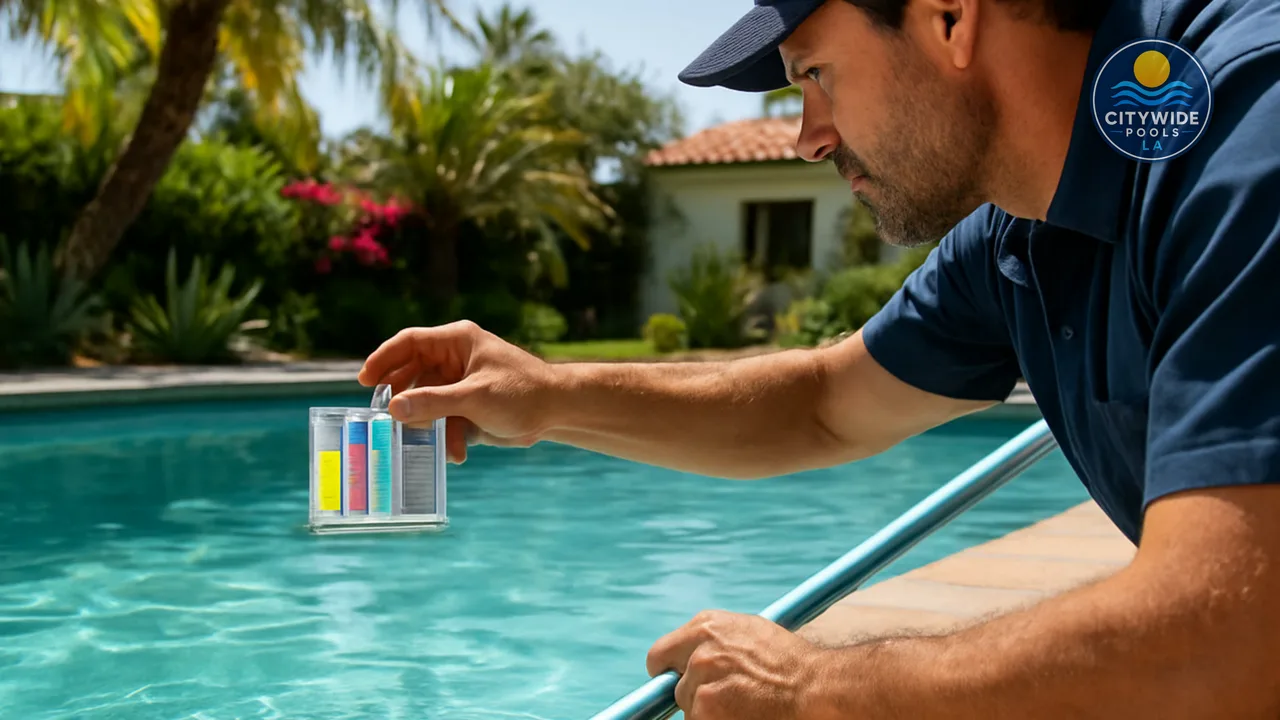
Testing matters. Guessing gets expensive.
A simple home test kit can show total alkalinity, pH, and sanitizer level. Test strips are convenient. Drop-based kits usually give clearer readings.
For a beginner, the order matters:
- Test the water before adding chemicals.
- Write down the numbers.
- Compare them to the last result.
- Adjust slowly.
Do not treat alkalinity, pH, chlorine, and calcium as separate stories. Pool water works as one system.
The Pool & Hot Tub Alliance explains water balance through several connected factors, including pH, alkalinity, calcium hardness, temperature, and dissolved solids. That’s why one adjustment can affect others.
FAQ: Pool Alkalinity Basics
What should pool alkalinity be?
Most residential pools work well around 80 to 120 ppm. Some pools need a different target based on sanitizer, plaster condition, and fill water.
Should alkalinity or pH be adjusted first?
Alkalinity usually gets reviewed before final pH adjustment. The two numbers affect each other, so retesting matters after treatment.
Can clear pool water still have bad alkalinity?
Yes. Clear water can hide early balance problems. Cloudiness may show up later, especially after heat, wind, or heavy use.
Does baking soda raise pool alkalinity?
Yes. Sodium bicarbonate raises total alkalinity. The right amount depends on pool size, current readings, and target range.
Why does alkalinity drift after hot weeks?
Heat increases evaporation. Top-off water adds minerals. Swimmers, sunscreen, dust, and debris can also change the water’s balance.
When should pool service handle it?
Call for help when the same problem repeats. Repeated pH drift, cloudiness, scale, or unclear service notes all point to a pattern.
Get Steadier Water Before It Turns Into a Bigger Job
Pool alkalinity is not about memorizing chemistry. It is about stopping the weekly surprise.
Start with one number: most residential pools do best with total alkalinity around 80 to 120 parts per million. Test it before adjusting pH, because low alkalinity can make pH jump around and turn routine care into guesswork.
Citywide Pools LA can help with a tailored approach, licensed local techs, photo reports, no chemical surcharge, and transparent communication. For pool cleaning, chemical balancing, and ongoing care, visit Los Angeles pool service.
Schedule service with Citywide Pools LA.