How Heat Burns Through Chlorine Faster
 Anthony · Citywide Pools LA · technically reviewed
 Pool Talk
If your free chlorine drops after one hot weekend, How Heat Burns Through Chlorine Faster explains what is happening. Los Angeles heat waves can quickly deplete chlorine, especially in sunny pools across Sherman Oaks and Encino. Sunlight and warm water create the main pressure, while swimmers, dust, and debris add more work.
That does not always mean you should keep pouring in more chlorine. First, test the water and check whether the pool is circulating and filtering well. The right fix depends on chlorine, pH, stabilizer, and the pool’s visible condition.
Why How Heat Burns Through Chlorine Faster Matters During Los Angeles Heat
A hot Los Angeles pool can lose its chlorine faster for two separate reasons:
- UV sunlight breaks chlorine down.
- Warm water speeds up chemical reactions.
- Swimmers, sunscreen, dust, and debris increase chlorine demand.
- Poor circulation or a dirty filter can slow recovery.
These effects often overlap during a heat wave. Therefore, a pool may need more frequent testing and service than it does during cooler weather.
Sunlight Breaks Down Chlorine Before It Can Protect the Water
A 2025 peer-reviewed chemistry paper describes cyanuric acid as widely used in outdoor pools to reduce chlorine photodegradation. In plain terms, sunlight breaks down chlorine before it can keep working in the water.
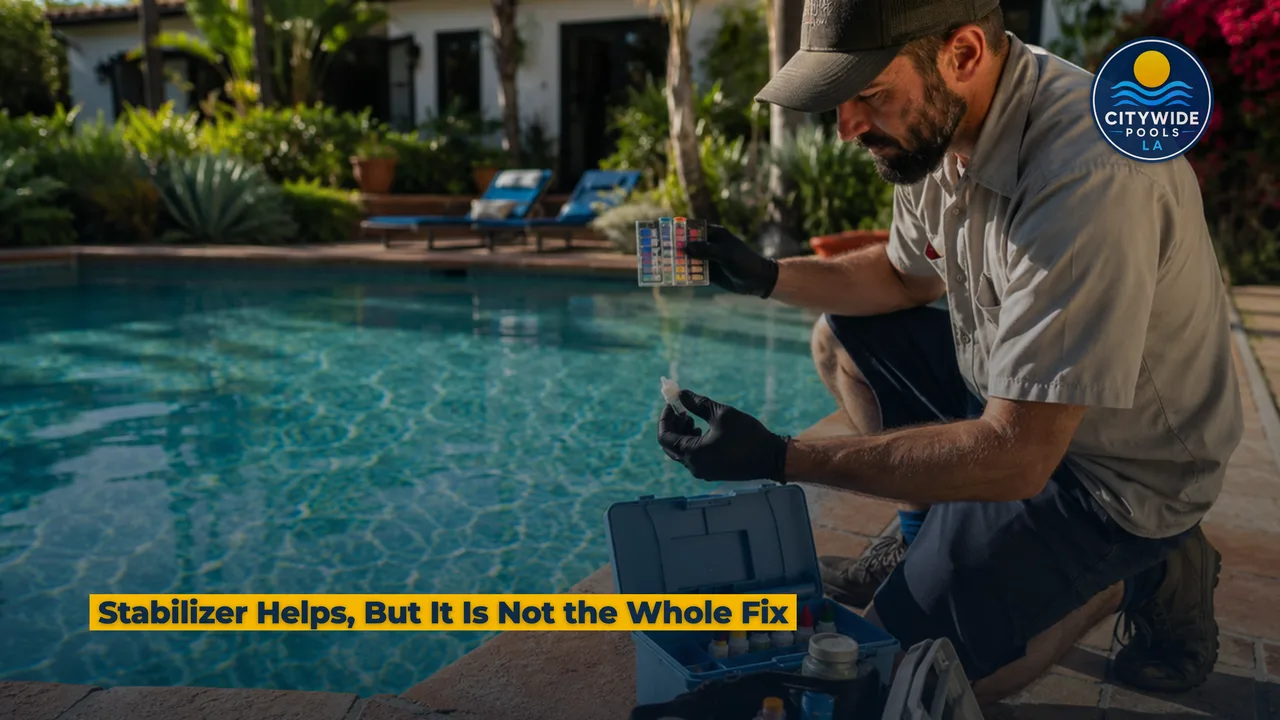
Orenda explains that warmer water can increase chlorine demand because contaminants are more prevalent. However, UV sunlight degradation is a separate issue. Stabilizer can help with sunlight, but it cannot solve every reason chlorine falls.
Direct sun matters most in open pools with little shade. That includes many residential pools in Los Angeles, where long sunny days can put steady pressure on the chlorine level.
Warm Water Increases the Work Chlorine Has to Do
Warm water raises the temperature of your pool. As a result, chlorine reacts with contaminants more quickly and dissipates into the air at a faster rate.
More swimmers also bring body oils, sunscreen, and other contaminants into the water. During a heat wave, those contaminants can use chlorine faster than usual. So, more frequent testing and top-ups are necessary during heat waves.
Your Pool Can Drift Before It Looks Green
A clear pool can still have chemistry that needs attention. Low chlorine may show up as:
- Cloudiness
- A strong or unusual odor
- Slippery surfaces
- Water that feels different
- A chlorine reading that keeps falling after treatment
These signs do not identify one single cause. Test before adding more chemicals, because extra chlorine will not repair poor circulation or correct every water-balance problem.
Low Chlorine Shows Up as Cloudiness, Odor, or Slippery Surfaces
CDC recommends pH 7.0–7.8 and free chlorine of at least 1 ppm in pools. If cyanuric acid is used, CDC recommends at least 2 ppm free chlorine in pools.
These levels help keep the water safe for swimming. They also give you a useful starting point when a pool has been exposed to strong sun, high temperatures, and heavy use.
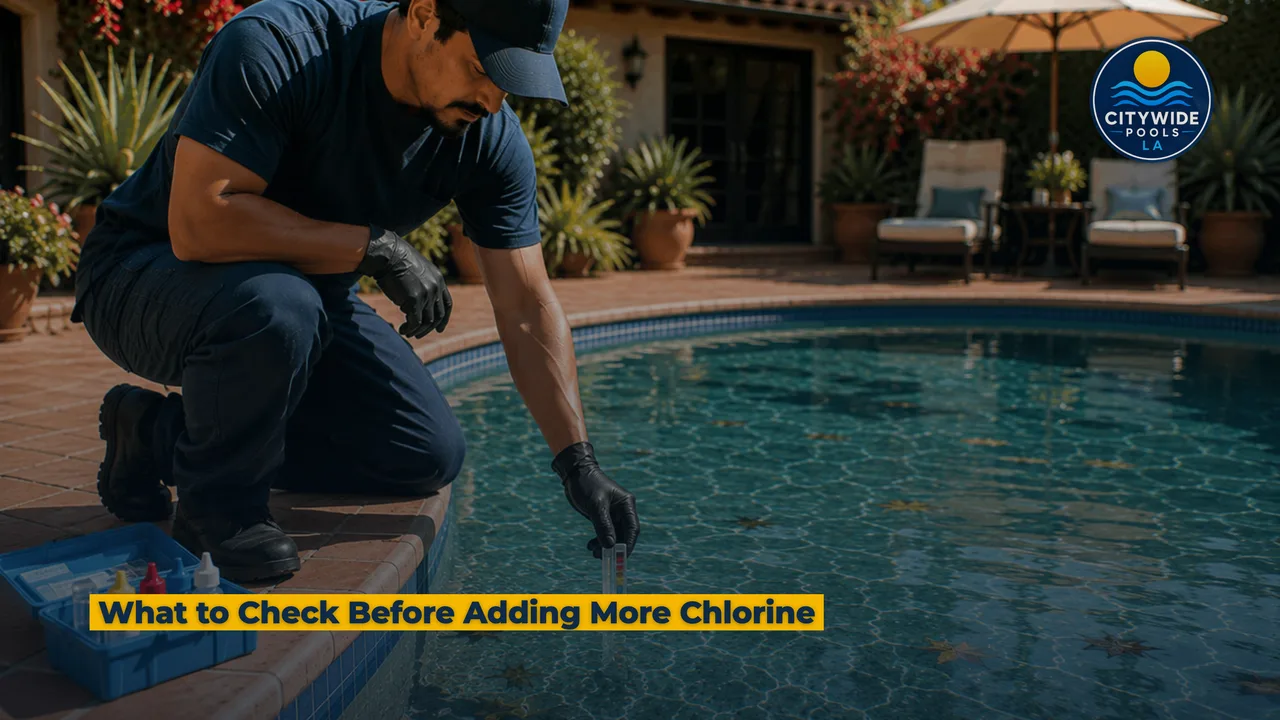
Use a reliable test method and follow its instructions. If the reading is unexpectedly low, test again rather than guessing. A professional should handle persistent low readings, cloudy water, strong odors, or equipment problems.
Clear Water Does Not Always Mean Balanced Water
Los Angeles hard tap water and evaporation-driven top-offs can nudge chemistry out of range during summer. Evaporation removes water but leaves dissolved minerals behind. Then, adding fresh tap water can change the pool’s balance again.
Regular testing helps maintain balance and prevents issues from escalating. It also shows whether the problem is a short-term chlorine demand or a broader chemistry issue.
For homeowners who want recurring help with cleaning, testing, and equipment checks, Citywide Pools LA provides Weekly Pool Service.
Stabilizer Helps, But It Is Not the Whole Fix
Cyanuric acid protects chlorine from sunlight but is not itself a disinfectant. A 2024 peer-reviewed review notes that cyanuric acid extends chlorine's effectiveness in pool water.
However, stabilizer does not prevent all chlorine loss. It cannot remove contaminants, replace circulation, or make a dirty filter work properly. Adding more without testing can also create a different water-balance problem.
Cyanuric Acid Protects Chlorine from Sunlight
Los Angeles County states that the legal minimum free chlorine residual is 1.0 ppm without stabilizer and 2.0 ppm with stabilizer. This means even stabilized pools can still lose significant amounts of chlorine during heat waves.
Do not treat stabilizer as a quick answer to every low-chlorine reading. Test free chlorine, pH, and stabilizer first. Then, use the results to decide whether the pool needs a measured chemical adjustment or a service visit.
If the pool has already turned green, avoid trying to solve a major cleanup by repeatedly adding chemicals without testing. Citywide Pools LA’s Green Pool Recovery service can help address a pool that needs more than routine summer maintenance.
Heat Waves Expose Weak Spots in Circulation and Filtration
Heat does not act alone. Debris, sunscreen, dust, and warm water raise chlorine demand. Filters and circulation decide how fast the water recovers after a heat wave.
A skimmer full of leaves, restricted flow, or a filter that needs attention can leave parts of the pool less effectively treated. That can make chlorine seem as if it disappears immediately after you add it.
Debris, Sunscreen, Dust, and Warm Water Raise Chlorine Demand
Citywide Pools LA’s public homepage currently positions weekly service as including balancing, cleaning, and equipment checks. Weekly maintenance is crucial to keep your pool balanced during peak summer months.
A homeowner can safely:
- Empty the skimmer basket if the pump is off and the basket is easy to access.
- Remove leaves and surface debris with normal pool tools.
- Check the water with a pool test kit.
- Record free chlorine, pH, and stabilizer readings.
- Confirm that the equipment area looks normal without opening or disassembling equipment.
Call a professional if the pump will not run, the filter pressure changes sharply, the water stays cloudy, or chlorine keeps dropping after testing and treatment. Do not open pressurized filter equipment or handle chemical systems you are not trained to service.
What to Check Before Adding More Chlorine
Before adding more chlorine, test the water for free chlorine, pH, stabilizer levels, and visible conditions. Knowing when the pool needs service can prevent unnecessary chemical additions.
Start with the basic questions:
- What is the free chlorine reading?
- Is the pH within the CDC-recommended range?
- Is cyanuric acid present, and what is its level?
- Has the pool had heavy use, sunscreen, dust, or debris?
- Is the water circulating and filtering normally?
- Is the pool cloudy, slippery, or producing an unusual odor?
Test Chlorine, pH, Stabilizer, and Visible Water Condition
Citywide Pools LA’s public homepage recommends same-week start and no-contract services. Regular testing ensures your pool stays balanced without over-chlorinating.
Testing is especially useful after a heat wave, a busy gathering, or a period when the pool sat exposed to debris. Keep a short record of the readings. A pattern is easier to diagnose than one unexplained result.
If you are unsure which chemical to use or how much to add, pause and call for service. Never mix pool chemicals, and follow the product label for any chemical you handle.
Frequently Asked Questions
Why does my chlorine disappear after a Los Angeles heat wave even when the water still looks clear?
Chlorine is consumed by contaminants, UV sunlight, and warm water. Testing pH and free chlorine levels can help identify if more chemicals are needed. A professional can also check circulation and filtration when the reading stays low.
Is heat actually burning off chlorine, or is the sun doing most of the damage?
Heat increases chemical reactions, but the main culprit is UV sunlight breaking down chlorine. Adding stabilizer helps but doesn’t eliminate all loss. Warm water and contaminants still increase chlorine demand.
Should I add more chlorine, more stabilizer, or call for service when chlorine keeps dropping?
Test the water first. If levels are low and stabilizer isn't enough, a professional can help diagnose the issue and recommend appropriate solutions. Persistent low readings, cloudy water, odors, and equipment problems all justify a service call.
Keep Chlorine Steady Through the Hottest Pool Months
Brentwood, Bel Air, Beverly Hills, and Hollywood Hills pools often face direct sun, hillside debris, landscaping, and event-prep pressure. Regular maintenance is key to keeping your pool safe and clear.
During the hottest months, test more often after heavy use or extreme heat. Remove easy-to-reach debris, watch for changes in water condition, and keep notes on recurring chlorine loss. Those simple steps give a technician better information if the problem continues.
CTA: If Your Pool Keeps Testing Low After Hot Weekends...
Weekly service can help find the cause before the water turns cloudy. Schedule pool cleaning and chemical balancing with Citywide Pools LA at Service Weekly.
Schedule pool cleaning and chemical balancing with Citywide Pools LA at Service Weekly.