How Cracked Mastic Can Lead to Bigger Pool Problems
 Anthony · Citywide Pools LA · technically reviewed
 Pool Talk
What should you do when you find cracked mastic in the dark, open line between your pool coping and deck? Start by photographing it and checking for nearby movement, loose tile, or deck damage. The crack is usually more than a cosmetic blemish. It can let water and debris into the expansion joint, where movement, trapped grit, and moisture may contribute to loose coping, damaged tile, or deck cracking.
A cracked joint does not automatically mean your pool shell is leaking. It also does not mean the entire deck needs replacement. However, it does mean the joint is no longer doing its job properly.
You can safely inspect and document the area yourself. Do not pry at the coping, cut into the joint, or pour products into the gap. Repairs involving loose coping, heaving concrete, or water intrusion should be evaluated by a qualified pool or deck professional.
What pool mastic is supposed to do
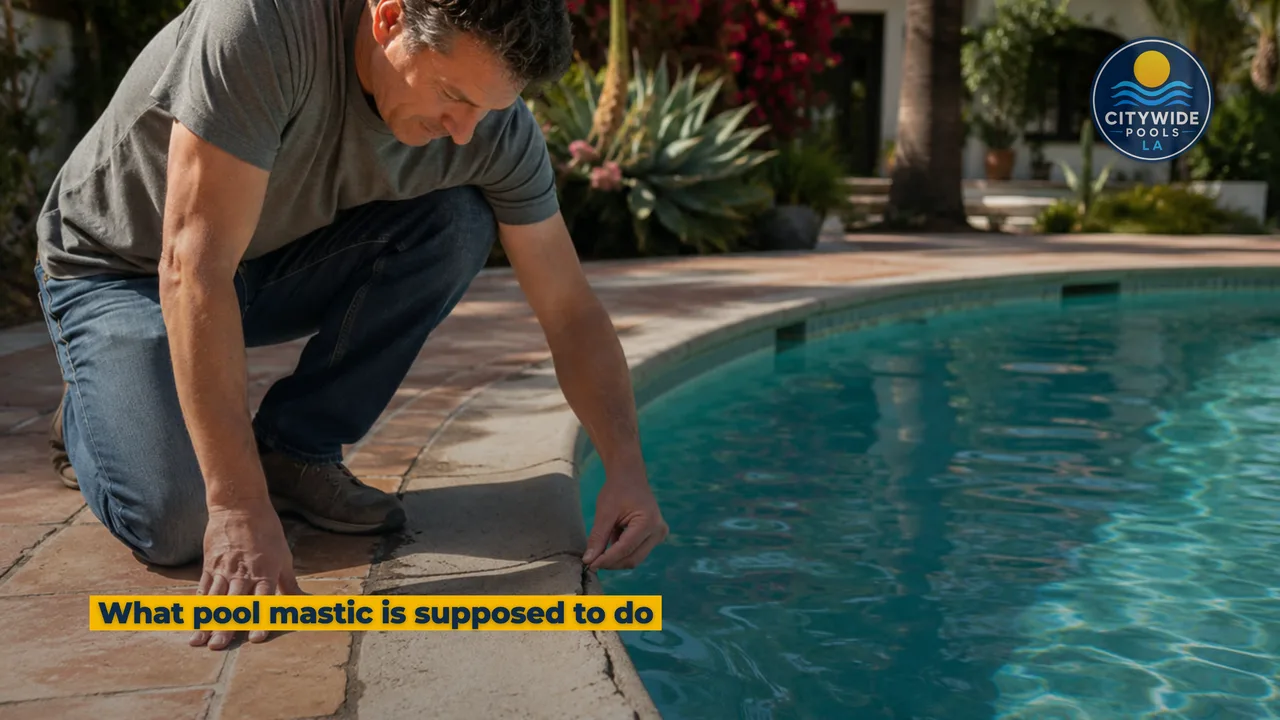
Mastic is the flexible sealant placed in the joint between the pool coping and the surrounding concrete deck. That joint gives the deck and pool edge room to expand, contract, and move without pressing directly against each other.
Think of the joint as a planned movement space. The pool edge and deck do not always move in the same way. A flexible sealant helps keep that space open while limiting the amount of water and debris that can collect there.
A rigid or missing joint material cannot handle that movement as well as a properly installed flexible sealant. DECK-O-SEAL describes its pool deck joint sealant as flexible, tear-resistant, weather-resistant, aging-resistant, and resistant to most chemicals. Those properties matter because a pool joint is exposed to sun, water, cleaning chemicals, foot traffic, and regular movement.
When mastic is intact, it helps keep out:
- Rain and splash-out
- Dust, leaves, and grit
- Small stones that can wedge into the joint
- Soil and organic debris
- Water that could otherwise collect below the deck edge
When the material cracks, shrinks, pulls away, or disappears, the open joint becomes a place for water and debris to gather. That does not prove that damage has already occurred below the surface. It does make the area worth watching, especially when other changes appear nearby.
Why Los Angeles weather can stress the joint
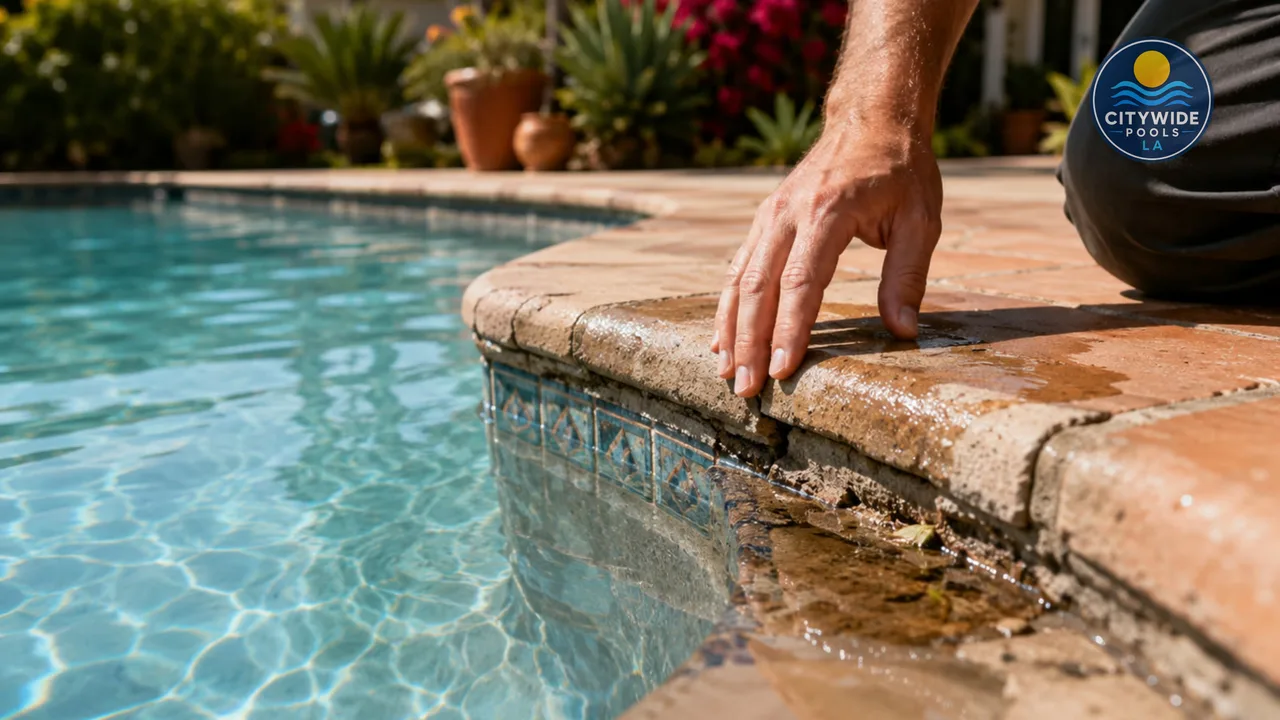
Concrete expands when it heats and contracts as it cools. Pool decks receive direct sun, and the coping can experience repeated temperature changes throughout the year. That movement is one reason the joint exists in the first place.
Los Angeles also has a seasonal wind pattern that can make an open joint dirtier. The National Weather Service describes Santa Ana winds as strong, hot, dust-bearing winds that descend toward the Pacific Coast around the Los Angeles area. NOAA also notes that these winds commonly occur from September through May.
As a result, fall through spring is an especially useful time to watch for packed dust, dried-out sealant, and debris collecting along the pool edge. A Santa Ana event does not crack every pool joint. But if the mastic is already brittle or separated, windblown grit can fill the gap and limit the space available for normal movement.
The debris can act like a wedge instead of allowing the joint to flex cleanly. In the field, that is why we pay attention to the joint’s condition, not just the size of one visible split. A narrow opening packed with grit may deserve more attention than a clean, short surface crack that has not changed.
How a small crack can become a larger concern
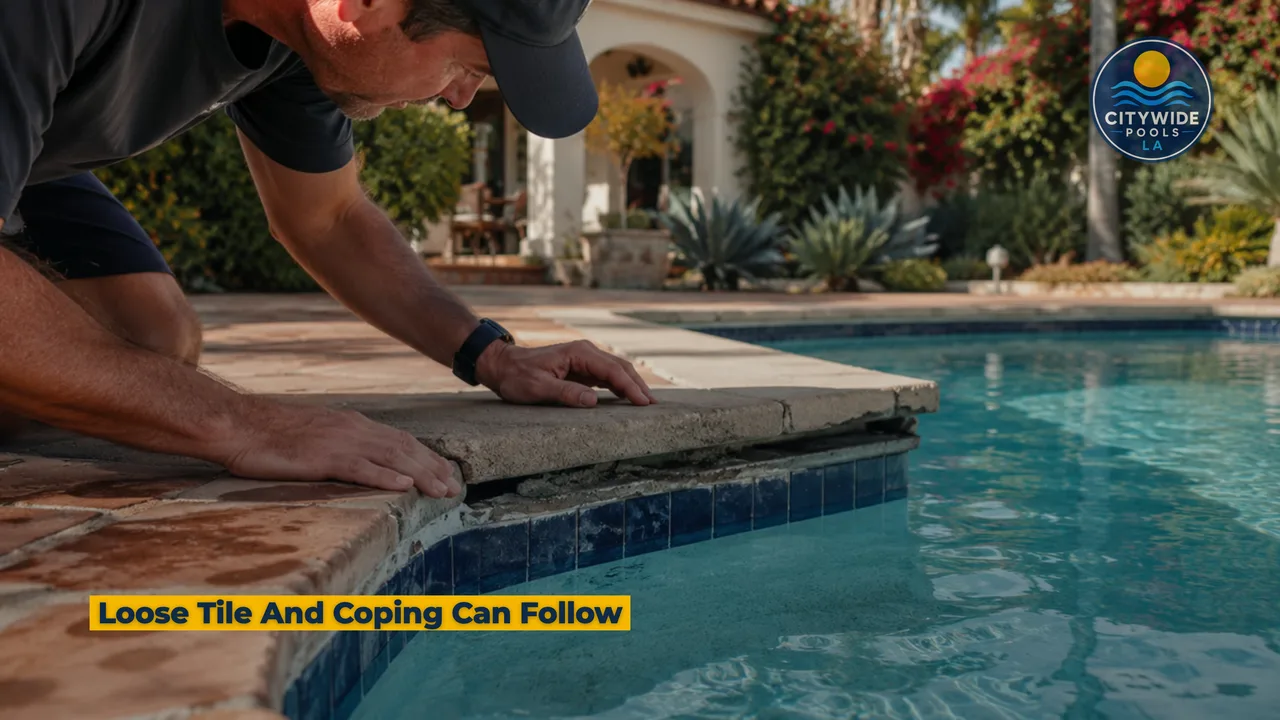
A failed joint is not automatically the cause of every pool problem. It is one possible pathway for water and debris to reach areas that are difficult to see.
Repeated water entry may contribute to:
- Soft or eroded material beneath an edge
- Staining along the coping or deck
- Separation between nearby materials
- Movement or cracking in adjacent concrete
- Loose waterline tile near the affected section
- Conditions that make freeze-related damage possible in colder regions, though this is less typical in Los Angeles
These conditions can have other causes, too. A cracked tile may relate to tile age, movement, impact, or another issue. Likewise, a raised deck may point to soil movement or a separate concrete problem. The mastic is one part of the area, so it should be considered with the surrounding evidence.
A 2025 trade source identifies cracked pool decking, loose or falling waterline tiles, widening gaps, and deck heaving as warning signs associated with expansion-joint problems. These signs do not prove that the mastic caused the damage. Seeing several in the same area is still a good reason to have the edge inspected.
Watch the pattern, not just one crack
One short surface split may be an aging sealant issue. A crack that keeps widening, runs along a raised section, or appears beside loose coping deserves more attention.
Pay particular notice to:
- A gap that is growing over time
- Coping that moves when gently touched
- A raised or sunken portion of deck
- Waterline tile that is loose, cracked, or falling out
- Water that sits in the joint after normal use
- Cracks extending from the coping into the deck
- A joint packed tightly with sand, dirt, or small stones
Take photographs from the same angle when possible. That gives you a simple record of whether the opening, surrounding concrete, coping, or tile has changed.
Do not pry at the coping or try to test its strength by standing on a questionable edge. A gentle touch is enough to notice obvious movement. If the edge shifts, stop checking it and arrange a professional inspection.
Mastic is not the same as the pool’s waterproofing
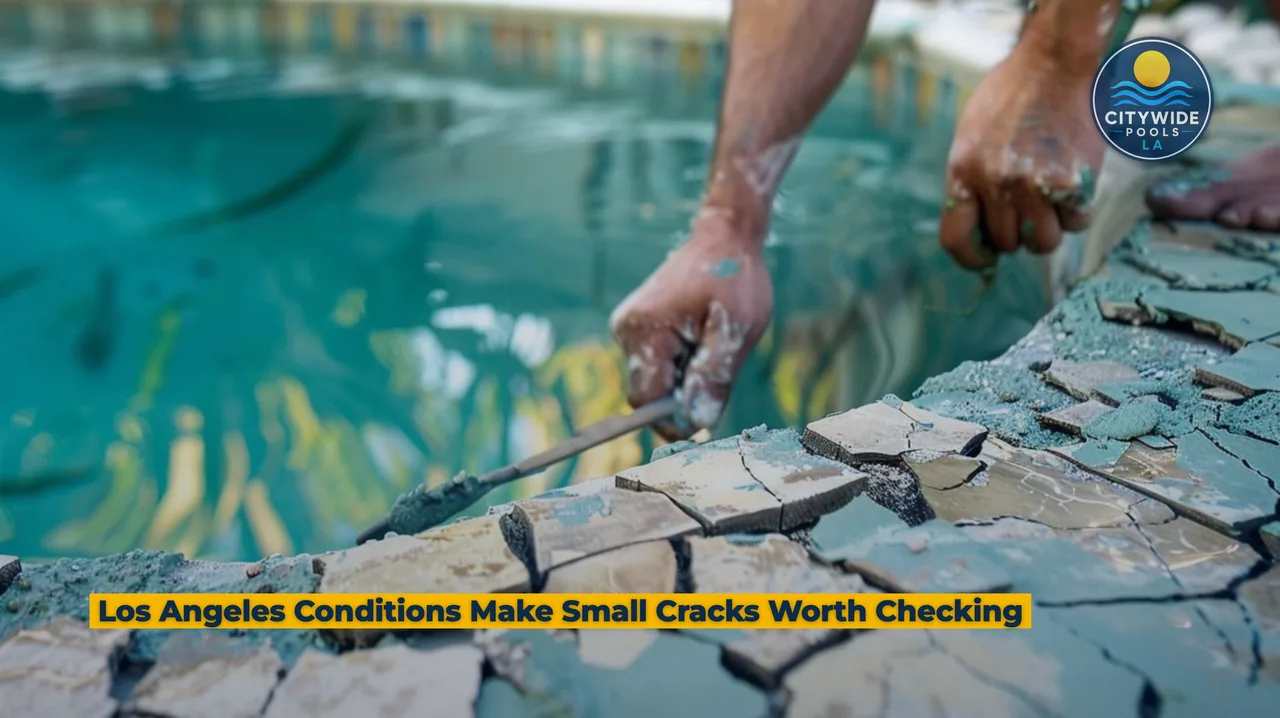
A cracked mastic joint can allow water into the deck-side joint. It does not mean the pool shell is immediately losing water through that crack.
The National Plasterers Council explains that pool watertightness comes from the concrete or shotcrete structure together with the interior finish coating. In other words, mastic helps manage the joint between the pool edge and deck. It is not the only barrier keeping the pool watertight.
That distinction helps avoid two common mistakes:
- Assuming every cracked joint is an emergency shell leak.
- Assuming the joint is harmless because the water level appears normal.
Both conclusions go too far. Instead, separate the visible joint condition from any suspected water-loss problem. Look at each issue on its own, then have a professional connect the findings when necessary.
If you are losing water, mark the water level and note whether it changes when the pump is running. This is a safe observation that can give a technician useful information. Do not remove fittings or perform pressure testing yourself.
A leak professional can determine whether the issue involves plumbing, the shell, the finish, the deck, or more than one area. If the pool also needs water-quality attention, Citywide Pools LA’s weekly pool service can help keep routine chemistry and equipment observations on track while a separate repair concern is evaluated.
What you can safely check yourself

A homeowner can perform a visual check without cutting into the joint or taking apart equipment. The goal is to document visible changes, not to diagnose the structure or recreate a repair test.
Use this simple inspection
- Walk the pool edge in good daylight.
- Look for missing, split, brittle, or separated mastic.
- Check corners, steps, raised spa edges, and areas near planters or drains.
- Photograph any gap beside a tile crack, loose coping, or deck movement.
- Compare the same areas after a windy day or heavy pool use.
- Keep leaves and loose debris off the deck so new changes are easier to see.
You can gently sweep loose debris away from the deck surface. Do not dig into the joint with a screwdriver, knife, or other sharp tool. Even a small attempt to open the gap can damage the coping edge or make the condition harder to assess.
Do not pour solvents, sealers, expanding foam, or household caulk into the gap. The wrong material can trap moisture, prevent movement, or make a proper repair more difficult.
You also do not need to remove the old mastic to decide whether the area needs attention. A photograph, a note about the date, and a description of nearby changes are more useful than an aggressive inspection that disturbs the joint.
Routine pool service can also help spot changes early. A technician who regularly sees the same pool may notice that one section has widened, shifted, or started collecting water. That repeated view is useful because small changes are easier to recognize when the same areas are observed over time.
If your pool has recently developed algae or other water-quality problems, handle that as a separate maintenance issue. Our green pool recovery service addresses water restoration, while cracked mastic and deck movement may require a separate repair evaluation.
When to call a professional
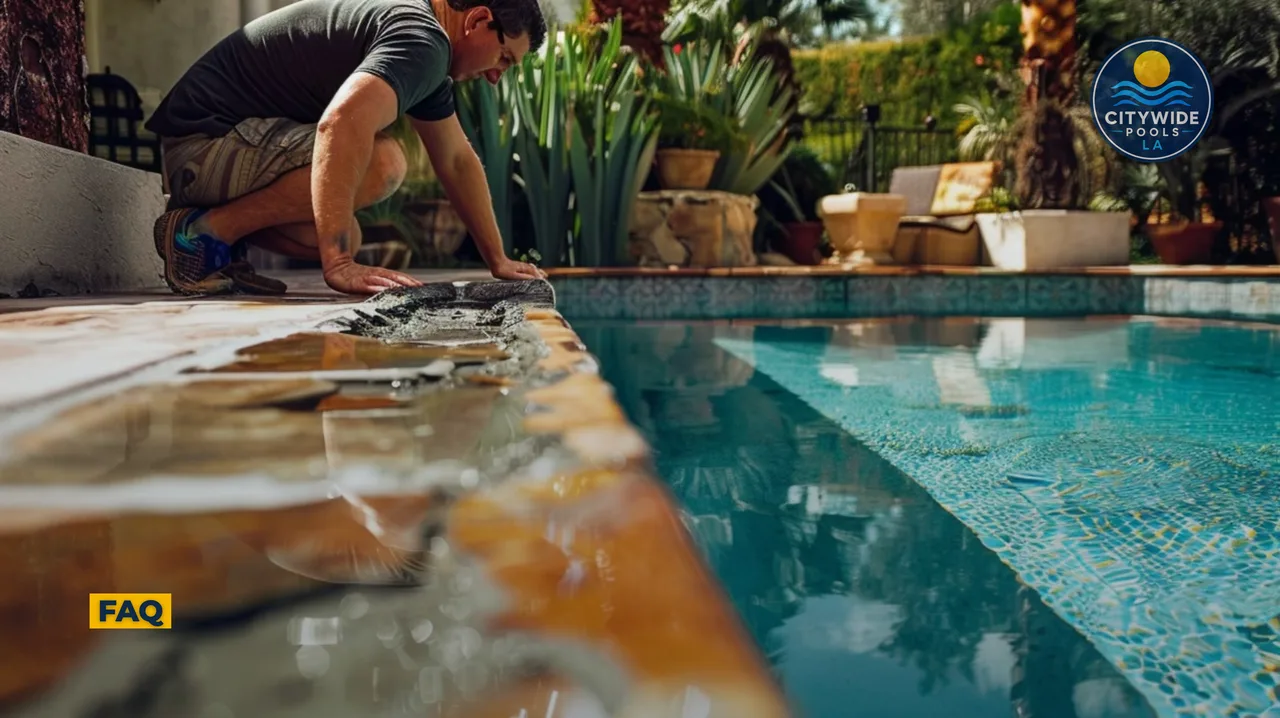
Call for an inspection when the crack is widening, the mastic has pulled away over a long section, or you see movement in the coping or deck. Professional attention is also appropriate when:
- The deck is heaving, sinking, or creating a trip hazard
- Several nearby tiles are loose or falling
- The coping sounds hollow or visibly separates
- Water is disappearing faster than expected
- The joint is open below the deck surface
- You suspect soil movement or structural damage
- A previous repair has failed repeatedly
Do not wait for every warning sign to appear. One serious sign, such as a trip hazard or visibly separating coping, is enough to stop using that section and request an inspection.
Replacing mastic is not always a simple matter of applying new material over the old line. The joint may need cleaning, removal of failed sealant, inspection of the edges, correct preparation, and a sealant designed for pool-deck movement and exposure.
W. R. Meadows identifies pool deck, coping, patio, and expansion-joint sealants as products used to help reduce water and salt penetration in these areas. The correct product and preparation matter. A new bead placed over dirt, loose material, or failed sealant may not last.
Also be careful with code advice found online. California public pool requirements are organized through the California Building Code, California Code of Regulations Title 22, and related public-pool laws, according to the California Department of Public Health. Those rules should not automatically be applied to a private residential pool without verification.
Public-pool materials do offer a useful safety principle: the Orange County Health Care Agency’s code compilation emphasizes deck areas that are slip-resistant, cleanable, and nonabrasive. For a residential pool, that supports taking cracked, raised, sharp, or difficult-to-clean deck areas seriously without claiming that a public-pool rule directly governs your backyard.
A professional can also help separate a sealant repair from a larger deck or coping repair. That distinction matters because replacing the visible mastic will not correct movement, unstable concrete, or damaged tile underneath.
How Citywide Pools LA can help
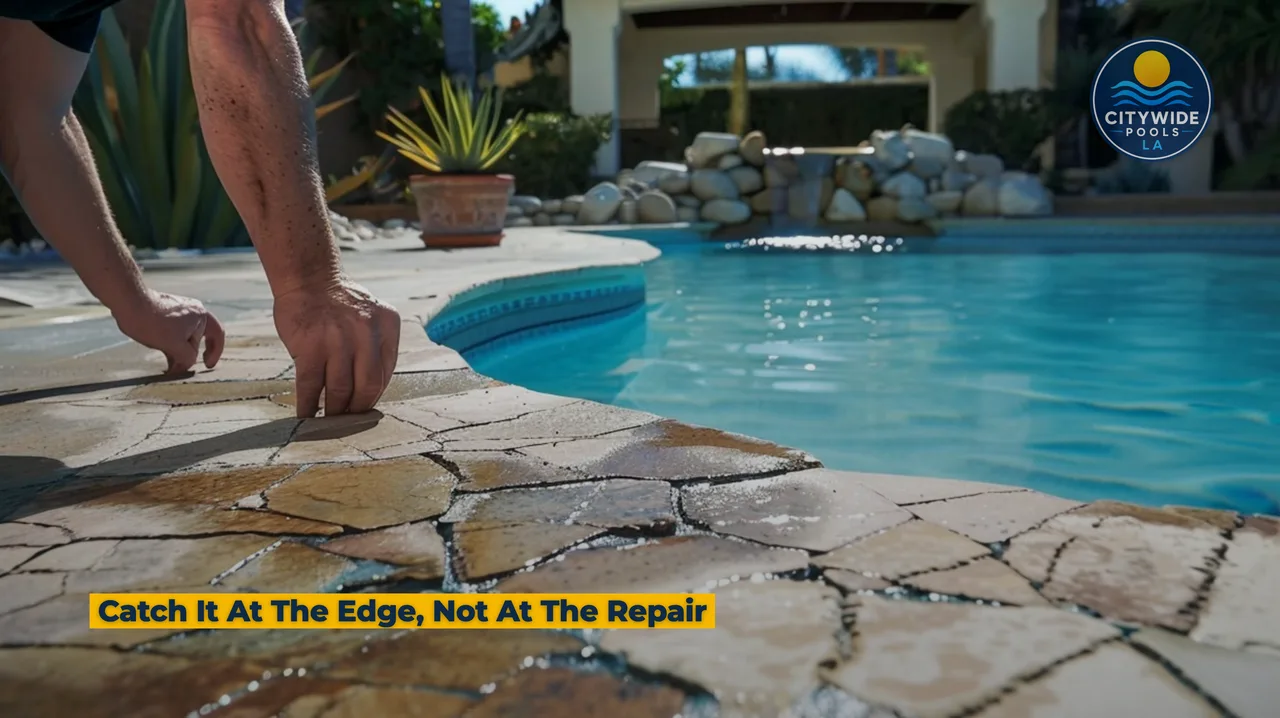
During regular pool service, Citywide Pools LA can note visible mastic damage, coping movement, loose tile, deck changes, and related maintenance concerns. We can also keep the water clean and chemistry properly managed while identifying conditions that need a separate repair specialist.
Our technician can document what is visible during the service visit. That may include the location of the cracked mastic, the length of an open section, nearby tile condition, and signs of water collecting in the joint. Documentation does not replace a structural inspection, but it gives you a clearer starting point.
Ask Citywide Pools LA to inspect the pool edge during your next service visit if you see cracked mastic, widening gaps, or nearby tile and deck changes. Early documentation can help you understand whether you are looking at aging sealant, a movement problem, or a larger repair concern.
For homeowners who want consistent attention to routine pool conditions, residential pool service for homeowners can provide an ongoing way to track visible changes. If the edge shows movement or structural damage, we can help identify when a qualified repair professional should be involved.
Frequently asked questions
Is cracked mastic an emergency?
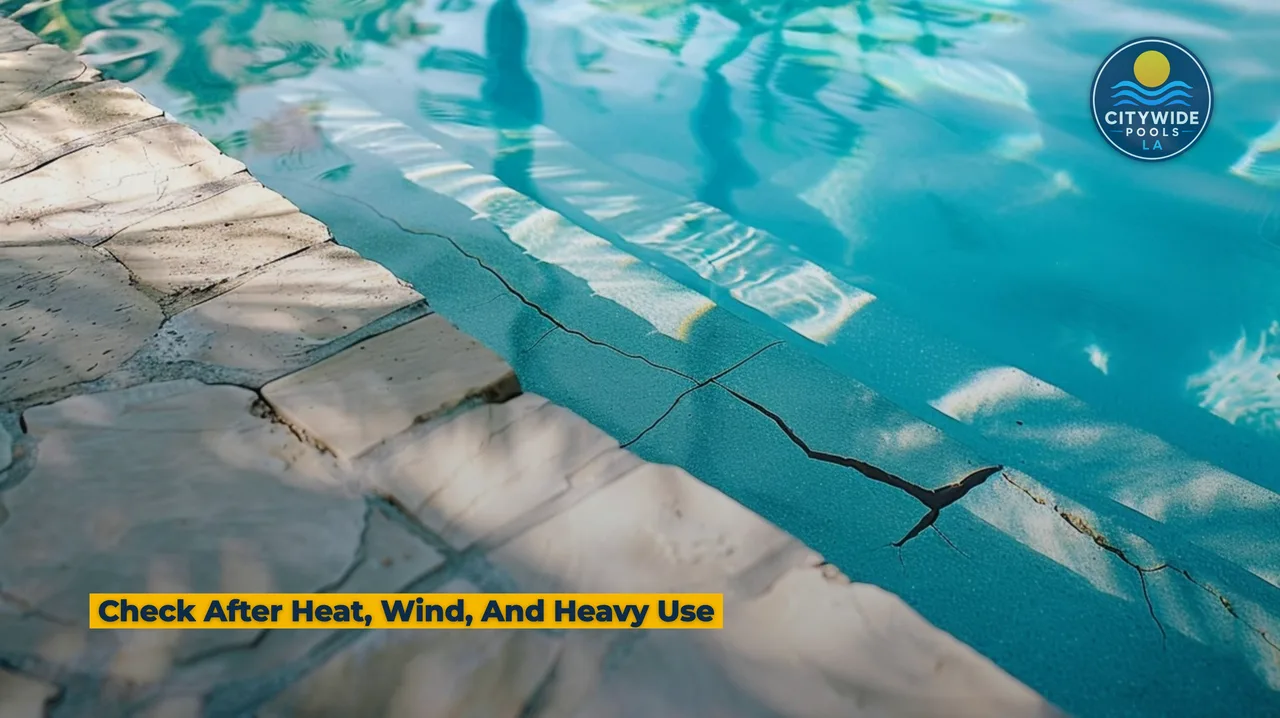
Usually not, especially if the crack is small and there is no loose coping, deck movement, or unusual water loss. It should still be documented and monitored.
Widening gaps, heaving, sharp edges, or loose materials deserve a professional inspection sooner. Until the area is checked, avoid standing on questionable coping or walking across a raised section.
Can I repair pool mastic myself?
Some homeowners are comfortable with minor sealant work, but the joint must be correctly prepared and the product must be suitable for pool-deck movement and exposure.
Do not attempt a DIY repair if the coping or deck is moving, the gap is deep, or water intrusion is suspected. Do not use household caulk, expanding foam, solvents, or other materials that are not designed for this type of joint.
Will cracked mastic make my pool lose chlorine?
Not directly. A failed joint is a deck-and-coping condition, not a chemical feeder.
If chlorine demand changes at the same time, check the water chemistry, circulation, filtration, debris load, and possible leaks separately. A mastic problem should not be used as the explanation for every change in chlorine use.
Does cracked mastic mean the pool shell is leaking?
No. Mastic protects and accommodates the deck-side joint.
The National Plasterers Council identifies the concrete or shotcrete structure and interior finish as part of the pool’s watertight system. A suspected leak needs its own evaluation. Mark the water level and note whether it changes when the pump is running, but do not remove fittings or perform pressure testing yourself.
How often should I inspect the joint?
Look at it during normal pool-area cleaning and after strong winds, periods of intense heat, or heavy use. In Los Angeles, fall through spring is worth extra attention because Santa Ana winds can carry hot, dry dust into open joints.
Photographing the same sections makes gradual changes easier to recognize. If you notice widening, movement, loose tile, heaving, sinking, or unusual water loss, contact a professional rather than trying to open or fill the joint yourself.